Learning Objectives
At the end of the lesson, students will be able to:
- Learn common cardiovascular/respiratory medical terminology.
- Become familiar with describing symptoms and illnesses.
- Demonstrate the ability to communicate with patients.
Vocabulary
| # | Traditional | Simplified | Pīnyīn | Definition |
|---|---|---|---|---|
| 1. | 高血壓 | 高血压 | Gāo xiěyā | Hypertension |
| 2. | 心率不齊 | 心率不齐 | Xīnlǜ bù qí | Arrhythmia |
| 3. | 胸口疼痛 | 胸口疼痛 | Xiōngkǒu téngtòng | Chest pain |
| 4. | 胸口不舒服 | 胸口不舒服 | Xiōngkǒu bú shūfú | Chest discomfort |
| 5. | 心絞痛 | 心绞痛 | Xīnjiǎotòng | Angina |
| 6. | 心肌梗死 / 心肌梗塞 | 心肌梗死 / 心肌梗塞 | Xīnjī gěngsǐ / Xīnjī gěngsè | Myocardial infarction |
| 7. | 急診室 | 急诊室 | Jízhěn shì | Emergency room |
| 8. | 心臟病發作 | 心脏病发作 | Xīnzàng bìng fāzuò | Heart attack |
| 9. | 心電圖 | 心电图 | Xīndiàntú | EKG (electrocardiogram) |
| 10. | 心臟雜音 | 心脏杂音 | Xīnzàng záyīn | Heart murmur |
| 11. | 心臟疾病 | 心脏疾病 | Xīnzàng jíbìng | Heart disease |
| 12. | 心脏血管搭橋手術 / 冠狀動脈繞道手術 | 心脏血管搭桥手术 / 冠状动脉绕道手术 | Xīnzàng xiěguǎn dāqiáo shǒushù / Guānzhuàng dòngmài ràodào shǒushù | Heart bypass surgery |
| 13. | 呼吸困難 | 呼吸困難 | Hūxī kùnnán | Dyspnea (trouble with breathing or difficulty breathing) |
| 14. | 哮喘 | 哮喘 | Xiāochuǎn | Asthma |
Supplementary Vocabulary
| # | Traditional | Simplified | Pīnyīn | Definition |
|---|---|---|---|---|
| 1. | 脈搏 | 脉搏 | Màibó | Pulse |
| 2. | 心率 | 心率 | Xīnlǜ | Heart rate |
| 3. | 呼吸頻率 | 呼吸频率 | Hūxī pínlǜ | Respiratory rate |
| 4. | 體溫 | 体温 | Tǐwēn | Temperature |
| 5. | 體重 | 体重 | Tǐzhòng | Body weight |
| 6. | 生命體徵 | 生命体征 | Shēngmìng tǐzhēng | Vital signs |
| 7. | 症狀 | 症状 | Zhèngzhuàng | Symptoms |
| 8. | 描述疼痛 | 描述疼痛 | Miáoshù téngtòng | Describe the pain |
| 9. | 壓力 | 压力 | Yālì | Pressure |
| 10. | 心臟驟停 | 心脏骤停 | Xīnzàng zhòu tíng | Cardio arrest |
| 11. | 中風 | 中风 | Zhòngfēng | Stroke |
| 12. | 病歷 | 病历 | Bìnglì | Medical record |
| 13. | 初步多普勒超聲波 | 初步多普勒超声波 | Chūbù duō pǔ lè chāoshēngbō | Preliminary Doppler ultrasound |
| 14. | 大動脈 | 大动脉 | Dàdòngmài | Aorta |
| 15. | 動脈 | 动脉 | Dòngmài | Artery |
| 16. | 頸動脈狹窄 | 颈动脉狭窄 | Jǐng dòngmài xiázhǎi | Carotid arterial stenosis |
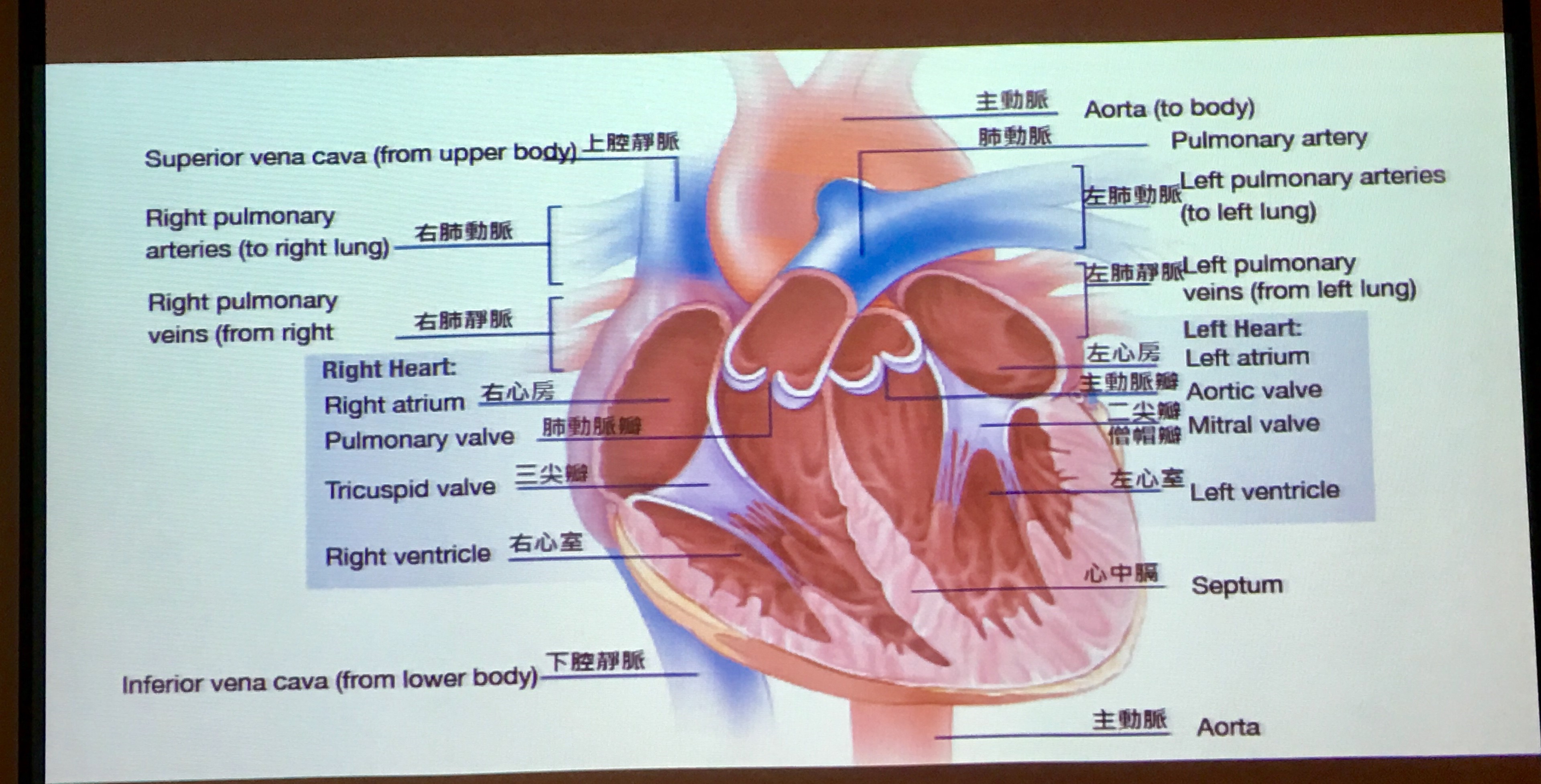
| 17. | 上腔靜脈 | 上腔静脉 | Shàng qiāng jìngmài | Superior vena cava |
| 18. | 下腔靜脈 | 下腔静脉 | Xià qiāng jìngmài | Inferior vena cava |
| 19. | 肺動脈 | 肺动脉 | Fèidòngmài | Pulmonary artery |
| 20. | 肺靜脈 | 肺静脉 | Fèijìngmài | Pulmonary vein |
| 21. | 瓣膜 | 瓣膜 | Bànmó | Valve |
| 22. | 心室間隔 | 心室间隔 | Xīnshì jiàngé | Ventricular septum |
| 23. | 左心房 | 左心房 | Zuǒ xīnfáng | Left atrium |
| 24. | 右心房 | 右心房 | Yòu xīnfáng | Right atrium |
| 25. | 左心室 | 左心室 | Zuǒ xīnshì | Left ventricle |
| 26. | 右心室 | 右心室 | Yòu xīnshì | Right ventricle |
| 27. | 三尖瓣 | 三尖瓣 | Sān jiān bàn | Tricuspid valve |
| 28. | 二尖瓣 | 二尖瓣 | Èr jiān bàn | Mitral valve |
| 29. | 心臟導管術 | 心脏导管术 | Xīnzàng dǎoguǎn shù | Heart catheterization |
| 30. | 胃灼熱 / 燒心 | 胃灼热 / 烧心 | Wèi zhuórè / shāo xīn | Heartburn |
| 31. | 外婆 / 外祖母 | 外婆 / 外祖母 | Wàipó / wàizǔmǔ | Maternal grandmother |
| 32. | 奶奶 / 祖母 | 奶奶 / 祖母 | Nǎinai / zǔmǔ | Paternal grandmother |
| 33. | 抗胃酸藥 | 抗胃酸药 | Kàng wèisuān yào | Antacid medication |
| 34. | 醫護助理 | 医护助理 | Yīhù zhùlǐ | Medical assistant |
| 35. | 頻繁 | 频繁 | Pínfán | Frequent |
| 36. | 靜脈曲張 | 静脉曲张 | Jìngmài qūzhāng | Varicose veins |
| 37. | 血栓 | 血栓 | Xuèshuān | Thrombus |
| 38. | 喘鳴 | 喘鸣 | Chuǎnmíng | Wheezing |
| 39. | 痰 | 痰 | Tán | Sputum |
| 40. | 肺 | 肺 | Fèi | Lung |
| 41. | 肺結核 | 肺结核 | Fèijiéhé | Tuberculosis (TB) |
| 42. | 氣短 | 气短 | Qìduǎn | Shortness of breath |
| 43. | 流感 / 流行性感冒 | 流感 / 流行性感冒 | Liúgǎn / liúxíng xìng gǎnmào | Flu / Influenza |
| 44. | 聽診 | 听诊 | Tīngzhěn | Auscultation |
| 45. | 胸部X光 | 胸部X光 | Xiōngbù X guāng | Chest X-ray |
| 46. | 氣管 | 气管 | Qìguǎn | Trachea |
| 47. | 支氣管 | 支气管 | Zhīqìguǎn | Bronchus |
| 48. | 慢性阻塞性肺病 | 慢性阻塞性肺病 | Mànxìng zǔsè xìng fèibìng | Chronic Obstructive Pulmonary Disease (COPD) |
| 49. | 肺氣腫 | 肺气肿 | Fèi qì zhǒng | Emphysema |
| 50. | 慢性支氣管炎 | 慢性支气管炎 | Mànxìng zhīqìguǎn yán | Chronic bronchitis |
Assignment
Please complete the following assignments:
- Pre-read the vocabulary list in lesson 5 above.
- Use the vocabulary from lesson 5 to create a short case scenario with your conversation partner (less than 3 minutes).
Practice Conversations
Practice conversation:
王醫生:吳太太, 你今天好嗎?
王医生:吴太太, 你今天好吗?
Dr. Wang: How are you doing today? Mrs. Wu.
病人:我最近覺得不太好。
病人:我最近觉得不太好。
Patient: I don’t feel very well lately.
王醫生:請多告訴我一點你為什麼覺得不舒服。
王医生:請多告訴我一点你為什麼覺得不舒服。
Dr. Wang: Please tell me more about why you don’t feel well.
病人:我有時候胸部不舒服。上個週末我到密歇根大學醫院的急診室去,因為我的胸口疼痛。
病人:我有时候胸部不舒服。上个周末我到密歇根大学医院的急诊室去,因为我的胸口疼痛。
Patient: I have chest discomfort sometimes. I went to Emergency Room at University of Michigan Hospital last weekend for my chest pain.
王醫生:是的,我看了你11月15日在急診室的醫療記錄。你能描述一下你疼痛的感覺嗎?
王医生:是的,我看了你11月15日在急诊室的医疗记录。你能描述一下你疼痛的感觉吗?
Dr. Wang: Yes, I’ve reviewed your medical record from ER on 11/15. Can you describe what the pain felt like?
病人:疼痛的感覺就像我的胸口有壓力。
病人:疼痛的感觉就像我的胸口有压力。
Patient: The pain felt like a pressure in my chest.
王醫生:你能明確的跟我描述一下你胸部疼痛的位置在哪兒?
王医生:你能明确的跟我描述一下你胸部疼痛的位置在哪儿?
Dr. Wang: Can you describe to me exactly where in your chest it hurts?
病人:我不太確定。有時候我覺得左邊痛。有時覺得壓力就在我胸部的正中間。
病人:我不太确定。有时候我觉得左边痛。有时觉得压力就在我胸部的正中间。
Patient: I am not quite sure. Sometimes I feel the pain is right here on the left side. Sometime it feels like the pressure is right in the middle of my chest.
王醫生:當你爬樓梯時, 你覺得你胸部的壓力是一樣的嗎?
王医生:当你爬楼梯时, 你觉得你胸部的压力是一样的吗?
Dr. Wang: Do you feel the same kind of pressure in your chest when you climbing stairs?
病人:我的房間是在二樓。我每天上下樓梯好幾次。我從來沒有注意到, 我爬樓梯的時候, 胸部會覺得不舒服。
病人:我的房间是在二楼。我每天上下楼梯好几次。我从来没有注意到, 我爬楼梯的时候, 胸部会觉得不舒服。
Patient: My bedroom is on the second floor. I go up and down the stairs several times a day. I’ve never noticed that I had chest discomfort when climbing stairs.
王醫生:這樣很好。你的家人, 有沒有人有心臟疾病病史?
王医生:这样很好。你的家人, 有没有人有心脏疾病病史?
Dr. Wang: That’s good. Does anyone in your family have a history of heart disease?
病人:我的外婆得過中風, 和某種心臟疾病。我媽媽告訴我,我的外婆做過心臟搭橋手術,她當時只有68歲。她74歲去世。我的天啊! 我只有39歲,我不能死於心臟發作。我的孩子們都還太小。他們需要媽媽。
病人:我的外婆得过中风, 和某种心脏疾病。我妈妈告诉我,我的外婆做过心脏搭桥手术,她当时只有68岁。她74岁去世。我的天啊! 我只有39岁,我不能死于心脏发作。我的孩子们都还太小。他们需要妈妈。
Patient: My maternal grandmother had a stroke and some kind of heart disease. My mom told me that my grandmother had a bypass heart surgery when she was 68. She died at age 74. Oh, my god. I’m only 39. I cannot die in heart attack. My children are too young. They need their mother.
王醫生:吳太太,你的胸部不舒服可能跟你的胃灼熱有關。你有沒有吃治胃灼熱的抗酸藥? 我今年六月時要你試著吃看看。
王医生:吴太太,你的胸部不舒服可能跟你的胃灼热有关。你有没有吃治胃灼热的抗酸药? 我今年六月时要你试着吃看看。
Dr. Wang: Mrs. Wu, your chest discomfort might be related to your heartburn. Have you been taking your antacid medication for heartburn that I asked you to try back in June this year?
病人:有,我吃了2-3天,我感覺好多了。我以為我的胃灼熱已經治好了,所以我就不吃了。
病人:有,我吃了2-3天,我感觉好多了。我以为我的胃灼热已经治好了,所以我就不吃了。
Patient: Yes, I took it for 2-3 days and I felt better. I thought my heartburn was cured, so I stop taking it.
王醫生:請在房間裡等一下。醫療助理會來幫你做一個心電圖檢查。如果今天你的心電圖很好,那你就每天繼續吃一片Omeprazole 20毫克治胃灼熱的藥,等過4-6週你再回來看我。記得,如果你有跟上次一樣的胸痛,你要去急診室。
王医生:请在房间里等一下。医疗助理会来帮你做一个心电图检查。如果今天你的心电图很好,那你就每天继续吃一片Omeprazole 20毫克治胃灼热的药,等过4-6周你再回来看我。记得,如果你有跟上次一样的胸痛,你要去急诊室。
Dr. Wang: Please wait in the room. One of the medical assistant will come in and do an EKG for you. If your EKG is fine today, then you continue to take your Omeprazole 20 mg for your heartburn one tablet daily until you come back to see me in 4-6 weeks. Remember, if you have chest pain like last time, you will need to go to ER.
病人:好的,我會的。謝謝王醫生。
病人:好的,我会的。谢谢王医生。
Patient: Ok, I will. Thank you, Dr. Wang.
Practice conversation #2:
Patient is a 6 y.o. girl who comes in with her mother to the Pediatrics Clinic. Patient is complaining of having trouble breathing, coughing, and wheezing that comes every time she goes to practice piano after dinner in the living room. There is also an accompanying, nonproductive cough and feeling of tightness in the chest. Have one person be the doctor, one the mother, and the other the child.
高醫生:下午好,你是陳太太嗎?
高医生:下午好,你是陈太太吗?
Dr. Gao: Good afternoon, are you Mrs. Chen?
陳太太:我是。
陈太太:我是。
Mrs. Chen: Yes I am.
高醫生:很高興認識你,這位一定是你的女兒利芬。利芬, 你感覺怎麼樣?
高医生:很高兴认识你,这位一定是你的女儿利芬。利芬, 你感觉怎么样?
Dr. Gao: Nice to meet you and this must be your daughter Lifen. How are you feeling Lifen?
利芬:利芬我還好。
利芬:我还好。
Lifen: I’m OK.
高醫生:你多大了?(你幾歲了?)
高医生:你多大了?(你几岁了?)
Dr. Gao: And how old are you?
利芬:我六歲。
利芬:我六岁。
Lifen: I am 6 years old.
高醫生:很好。陳太太,利芬有哪裡不舒服什麼困擾嗎?
高医生:很好。陈太太,利芬有哪里不舒服什么困扰吗?
Dr. Gao: Great. Mrs. Chen, what seems to be troubling Lifen?
陳太太:她好像覺得呼吸困難。每次發生都是在她吃過晚飯後, 在我們的客廳練鋼琴時。
陈太太:她好像觉得呼吸困难。每次发生都是在她吃过晚饭后, 在我们的客厅练钢琴时。
Mrs. Chen: She seems to have trouble with her breathing. It seems to happen every time she goes to practice piano after dinner in our living room.
高醫生:這樣大概有多久了?
高医生:这样大概有多久了?
Dr. Gao: How long has this been occurring?
陳太太:幾個星期前開始的,但似乎是發生更頻繁。
陈太太:几个星期前开始的,但似乎是发生更频繁。
Mrs. Chen: It started a few weeks ago but it seems to be happening more frequently.
高醫生:利芬,當你有呼吸困難時是什麼感覺,你有沒有咳嗽?怎麼樣會覺得好一點?
高医生:利芬,当你有呼吸困难時是什么感觉,你有没有咳嗽?怎麼樣會覺得好一点?
Dr. Gao: Lifen, what does it feel like when you have trouble breathing? Do you have a cough? What makes them better?
利芬:我覺得害怕,而且一直咳嗽。爸爸媽媽帶我去外面,這樣我就覺得好多了。
利芬:我觉得害怕,而且一直咳嗽。爸爸妈妈带我去外面,这样我就觉得好多了。
Lifen: I get scared and cough a lot. Mom and dad have to take me outside and that makes me feel better.
陳太太:她聽起來像有喘鳴聲,我們想新鮮空氣對她有幫助, 所以我們就帶她到外面去。
陈太太:她听起来像有喘鸣声,我们想新鲜空气对她有帮助, 所以我们就带她到外面去。
Mrs. Chen: It sounds like wheezing and we think fresh air helps so we take her outside.
高醫生:利芬,你覺得在你的胸部有壓力嗎?
高医生:利芬,你觉得在你的胸部有压力吗?
Dr. Gao: Lifen, do you feel pressure in your chest?
利芬:有。
利芬:有。
Lifen: Yes.
高醫生:利芬正在練習鋼琴時,家裡還有什麼事情嗎?
高医生:利芬正在练习钢琴时,家里还有什么事情吗?
Dr. Gao: Is there anything else going on in the house when Lifen is practicing piano?
陳太太:我想應該沒有。通常,我洗碗, 我先生有晚飯後抽煙的習慣,他喜歡坐著聽利芬彈鋼琴。
陈太太:我想应该没有。通常,我洗碗, 我先生有晚饭后抽烟的习惯,他喜欢坐着听利芬弹钢琴。
Mrs. Chen: I don’t think so. Normally, I clean the dishes and my husband has a habit of smoking a cigarette after dinner and listening to Lifen playing piano. He enjoys that very much.
高醫生:問題可能就出在這裏。抽煙絕對會讓症狀加重。我們要做一些測試,檢查她有沒有哮喘。
高医生:问题可能就出在这里。抽烟绝对会让症状加重。我们要做一些测试,检查她有没有哮喘。
Dr. Gao: That may be the problem. Smoking can definitely make symptoms worse. We’re going to run some tests to check for asthma.
陳太太:非常感謝你,高醫生。或 高大夫。
陈太太:非常感谢你,高医生。或 高大夫。
Mrs. Chen: Thank you very much, Dr. Gao.